TECHNOLOGY
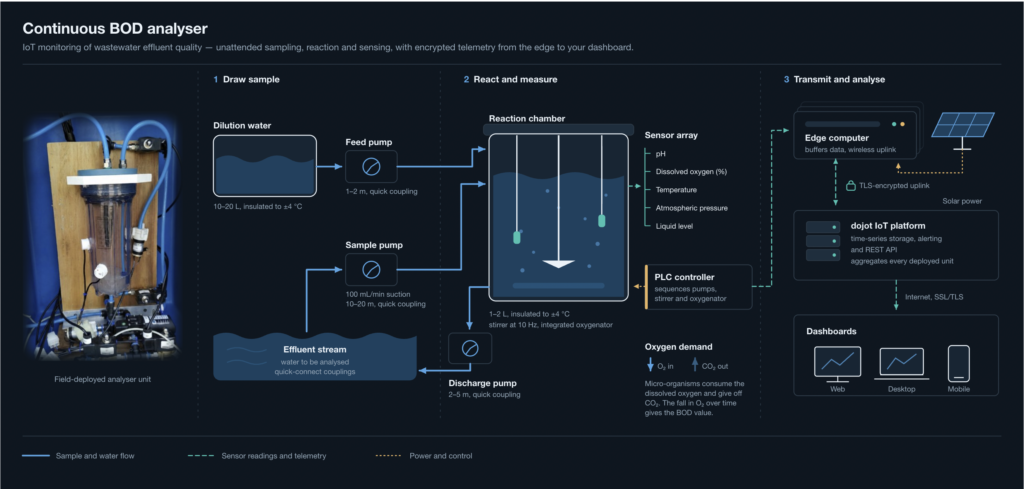
AquaSense AI’s system combines a bioreactor, optical sensors, an IoT platform, a cloud-based supervisory system, and a data-science model — working together to estimate BOD continuously, instead of waiting on a five-day lab result.
None of this replaces the certified lab test, which remains the reference method. The system uses the data it collects to infer BOD5, and that estimate is checked against lab measurements the whole time — not swapped in as a replacement for them.
BIOREACTOR · OPTICAL SENSORS · IoT PLATFORM · CLOUD SUPERVISION · DATA SCIENCE
How the system works
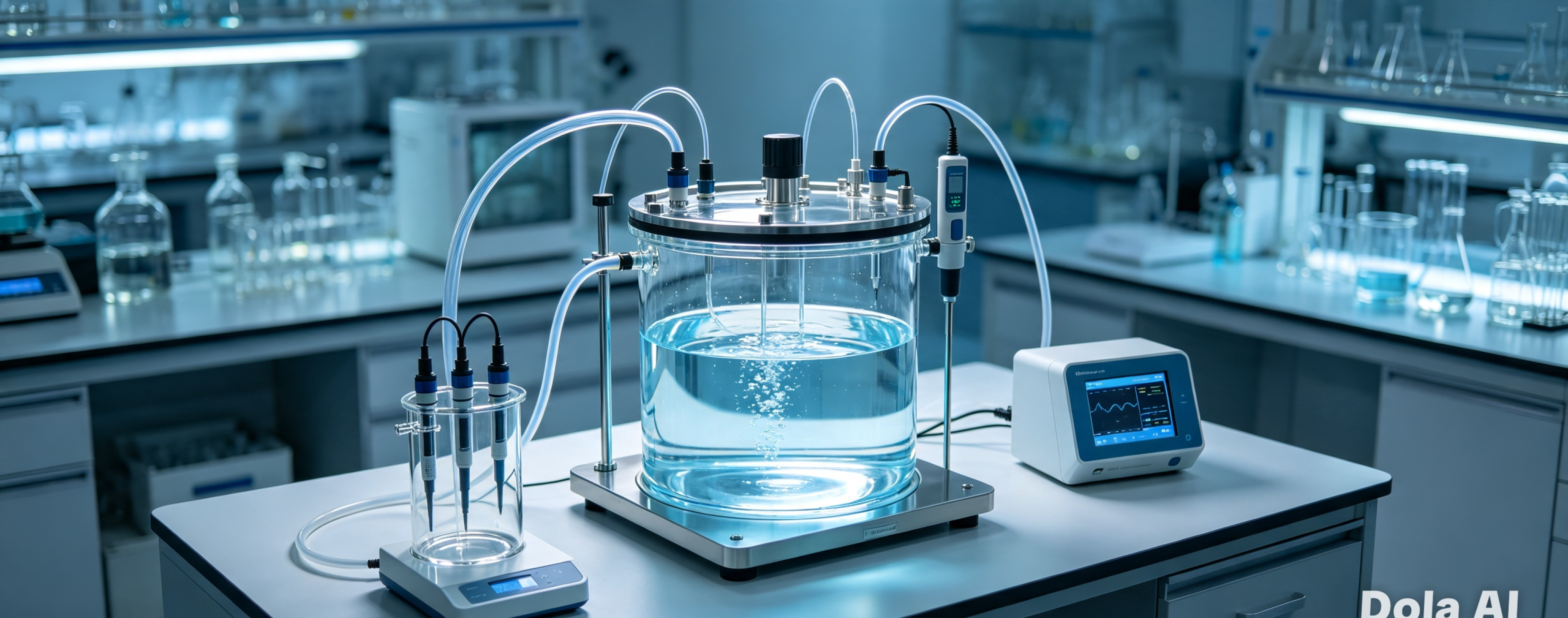
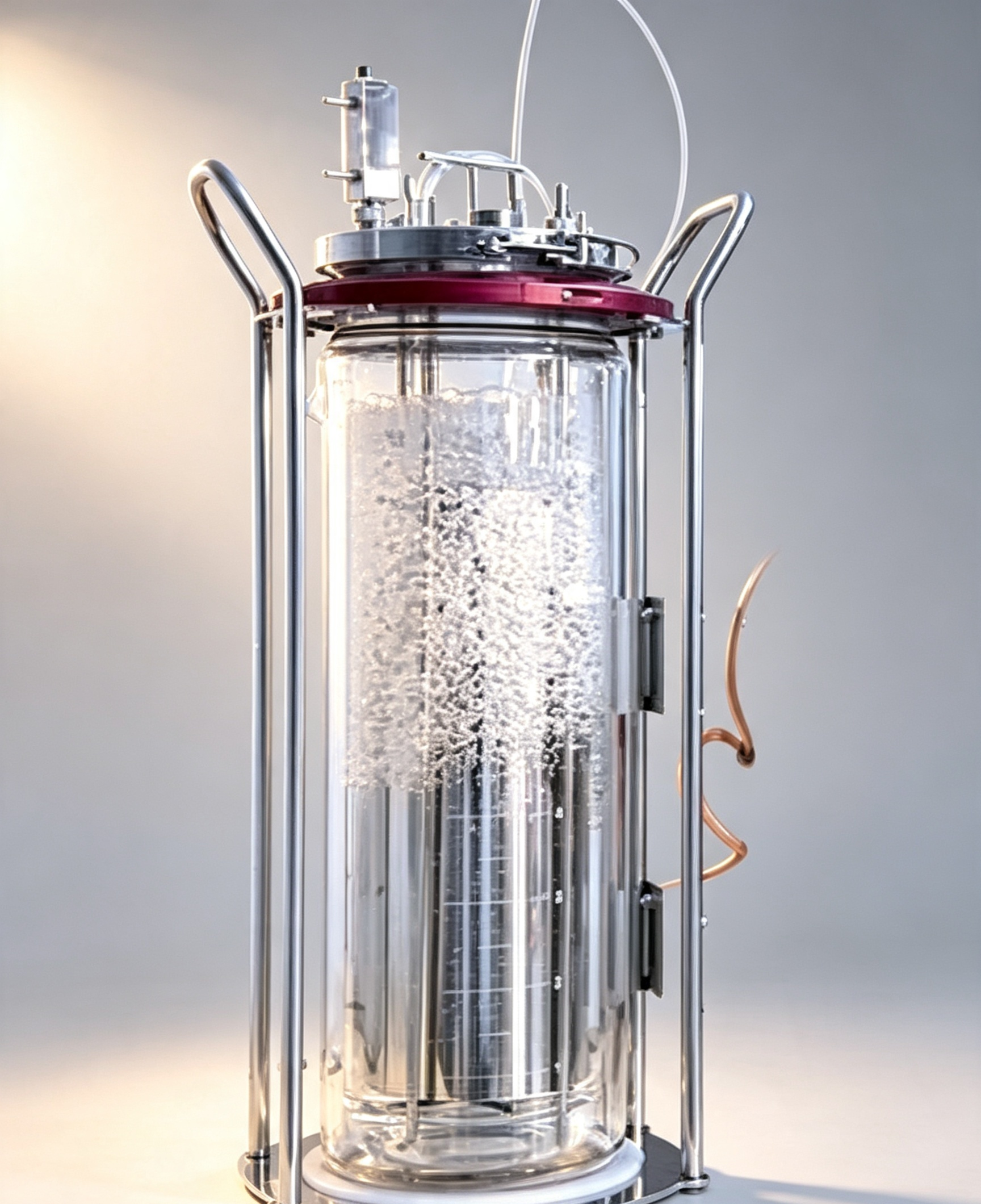
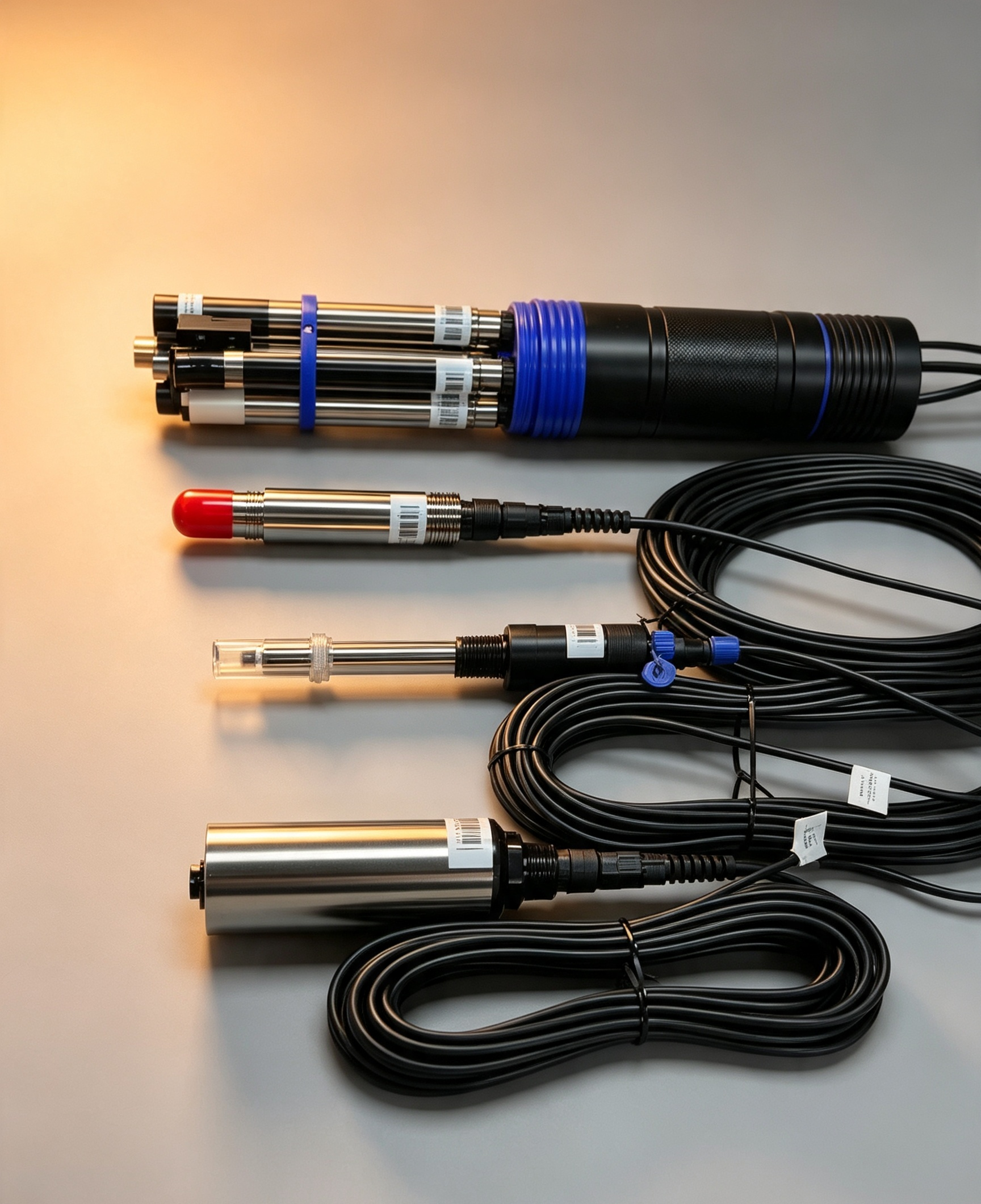
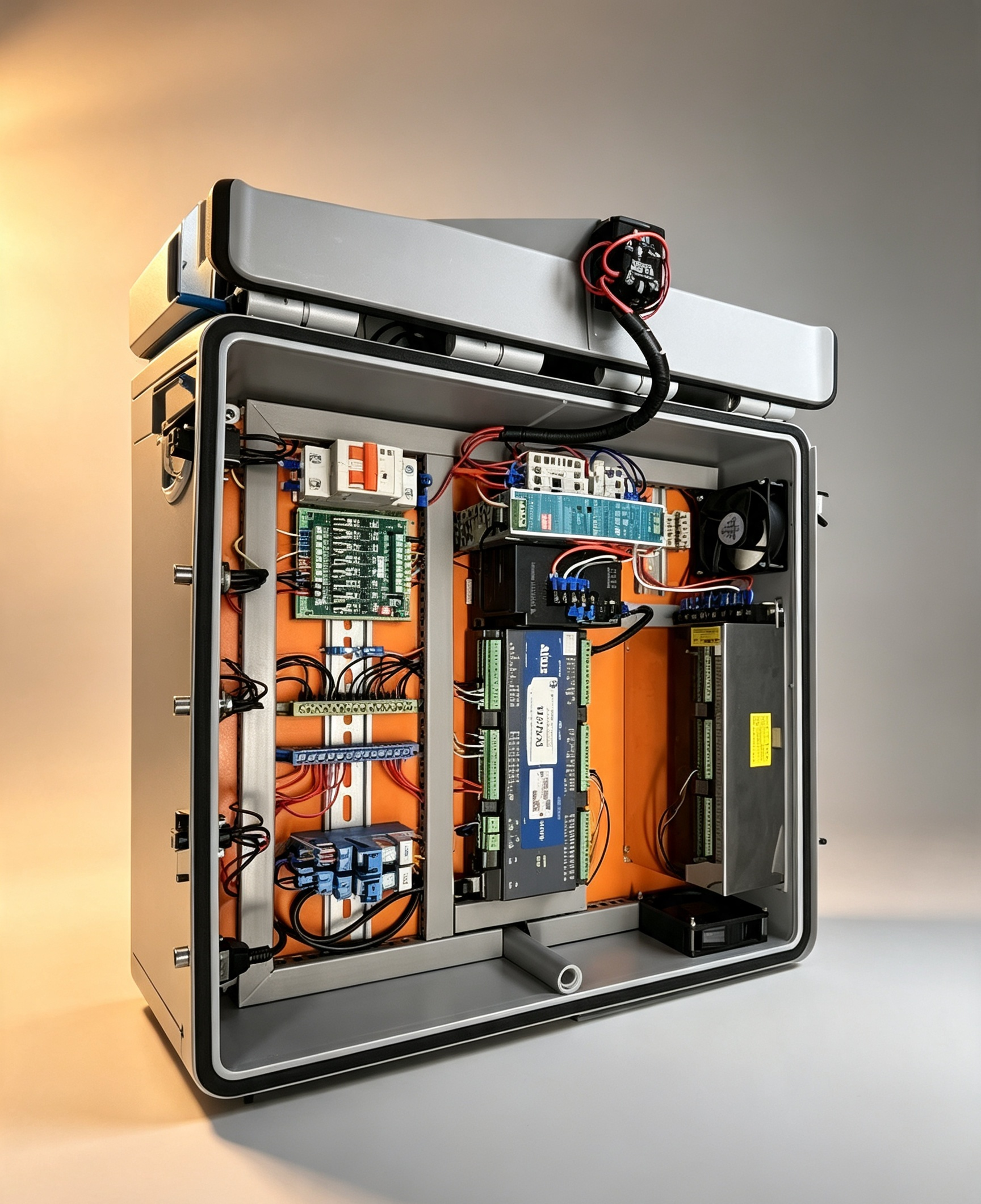
A bioreactor holds the sample under controlled conditions so the biological process can be observed. Optical sensors use light-based measurements to read characteristics of the water. An IoT platform connects the equipment and moves that data, with part of the processing happening at the bioreactor itself — an “edge computing” approach — rather than relying entirely on a remote server. A cloud platform stores and processes the data, a supervisory system lets operators see what’s happening in real time, and a data-science model turns all of it into a continuous BOD estimate.
The actual hardware
Measuring vs. estimating
This is an important distinction. The sensors don’t measure BOD directly the way a lab test does — they measure other characteristics of the water and the process, and a data-science model uses that information to infer BOD5. That estimate is compared against the certified lab method the whole time, not used in place of it.
A continuous estimate is only useful if it keeps agreeing with the lab — so it’s checked against the lab, every time.
What the proof of concept showed
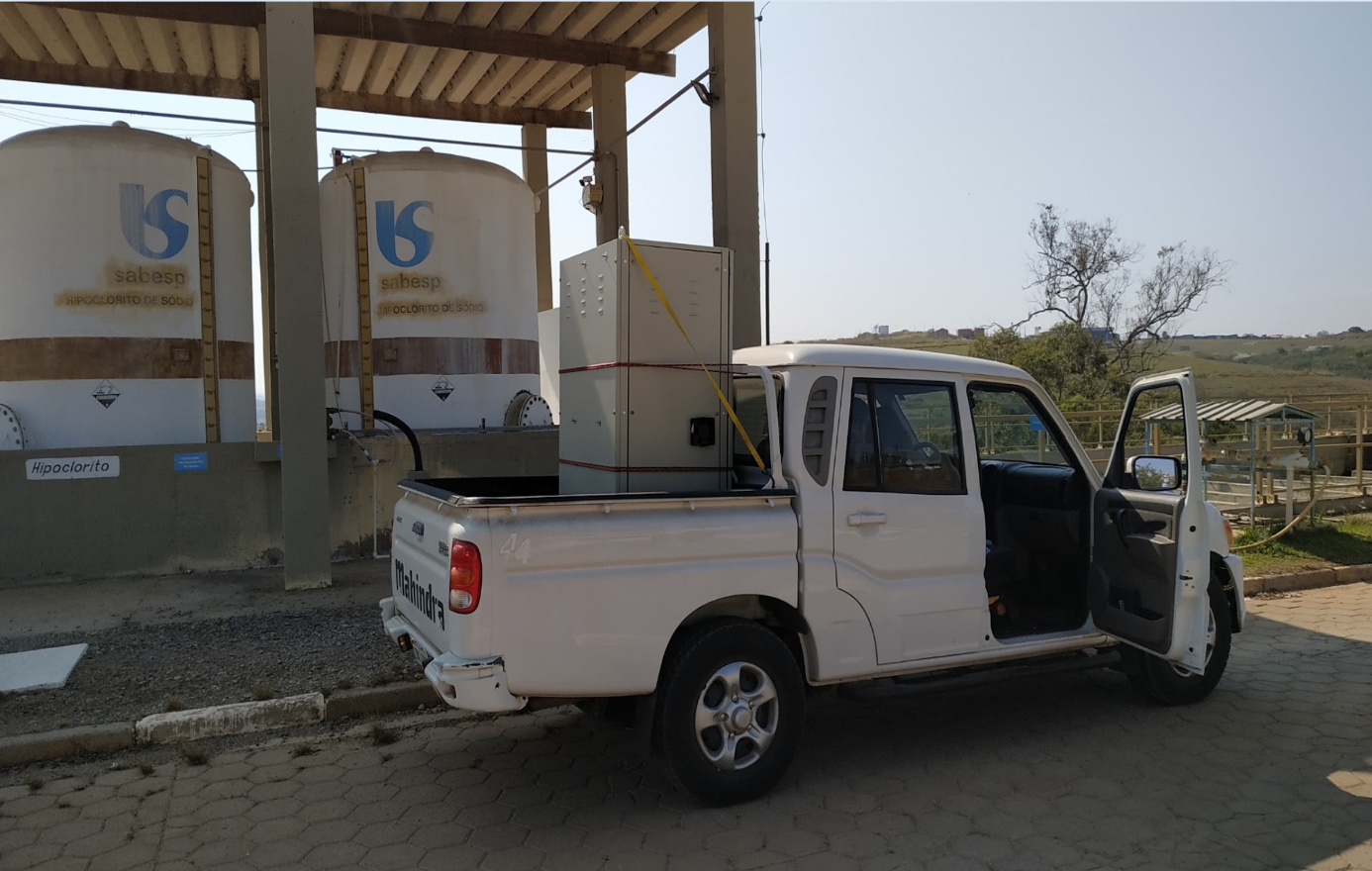
In field testing, this approach cut BOD5 turnaround from roughly 7–8 days to 2–3 days — up to an 80% reduction in analysis time — with results tracking closely against certified lab measurements throughout. That’s what the proof of concept demonstrated: the feasibility of getting BOD-related information faster and continuously. It’s not a specific statistical accuracy claim beyond what’s been measured, and it’s not a replacement for the lab.
Where it stands, and what’s next
This is proof-of-concept technology, not a finished, plug-and-play product. Bringing it to more plants means further validation across different processes and effluent types, ongoing calibration and maintenance, and hardening the bioreactor itself for wider deployment. The near-term roadmap is to add more sensors and expand the data-science models — moving from single-parameter monitoring toward multi-parameter monitoring, and eventually toward anomaly detection and decision support.