AQUACULTURE
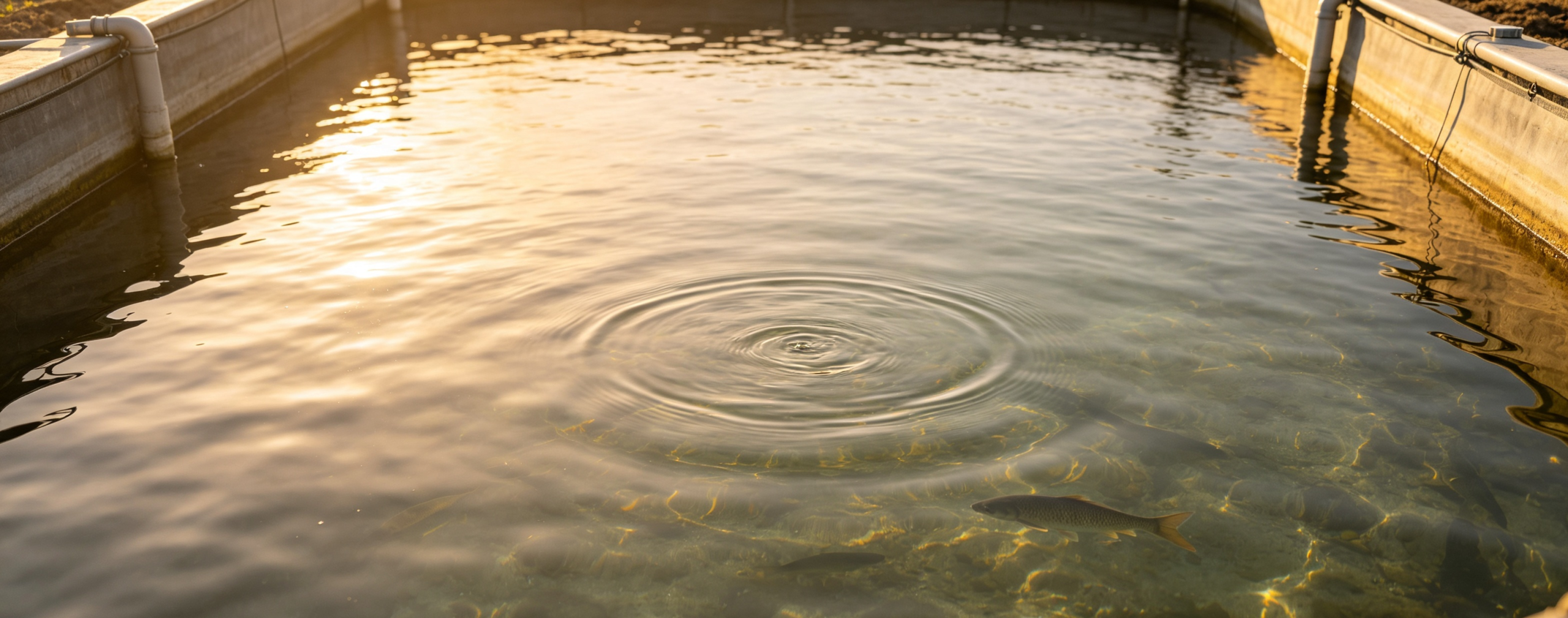
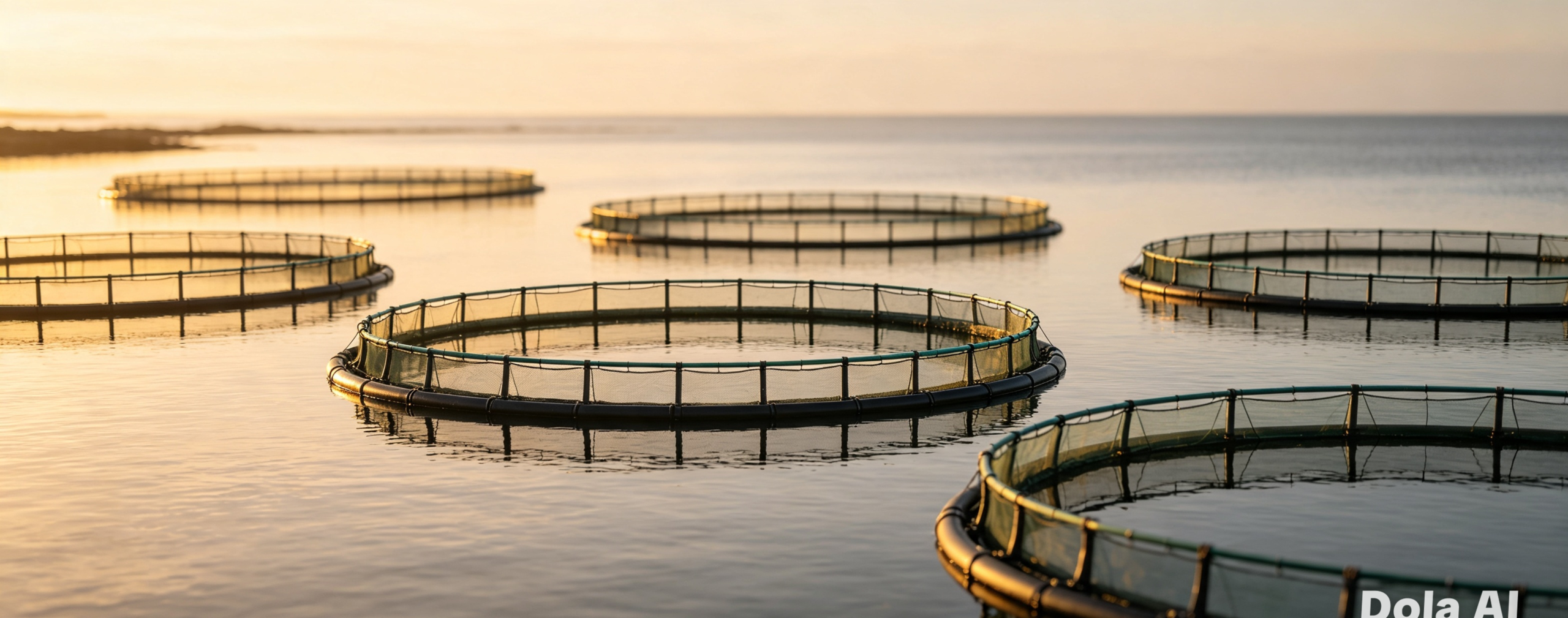
Fish farms depend on stable water quality — dissolved oxygen swings or rising organic load can stress or harm stock long before it’s visible.
We’re applying the same optical dissolved-oxygen sensing approach used in our compliance-monitoring work to aquaculture settings, in early-stage research.
EARLY-STAGE RESEARCH · SAME CORE SENSING · CONTINUOUS MONITORING
Why water quality matters for fish health?
Fish, like all aquatic animals, depend on dissolved oxygen in the water to breathe — their gills draw oxygen directly from the water around them, the same way lungs draw it from air. When organic matter builds up in a pond or tank (uneaten feed, waste, decaying matter), the bacteria that break it down consume oxygen to do so — competing with the fish for the same limited supply. When oxygen drops too low, fish become stressed, eat less, grow more slowly, and become more vulnerable to disease; in severe cases, low oxygen can cause sudden, large-scale losses with very little warning, as the water can look fine right up until it isn’t. It’s the same underlying relationship seen in wastewater treatment — organic load drives oxygen demand — except here it affects the health of a living population directly, not just a compliance number. Continuous dissolved-oxygen sensing gives farm operators a way to see conditions trending downward before fish are visibly stressed, rather than finding out only after symptoms appear or a loss has already happened; this is the early-stage research direction being explored, applying the same optical sensing approach used in the wastewater treatment work to fish-farming environments.